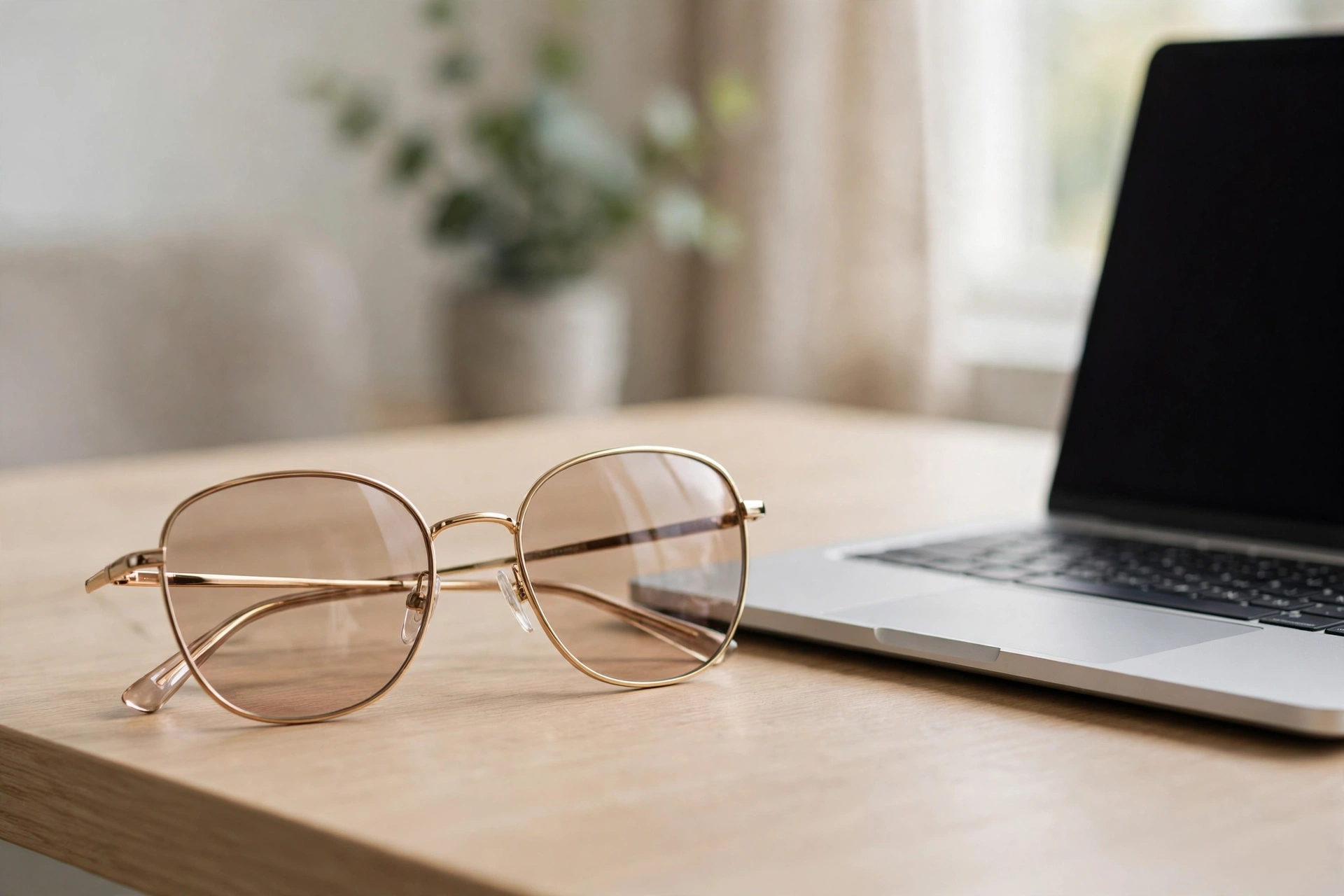
Probably not. A 2023 Cochrane review of 17 trials found no good evidence that blue light glasses reduce eye strain, and the College of Optometrists doesn’t recommend them for that purpose. If your eyes ache after screen time, your money is better spent on proper breaks, a better screen setup, and an up-to-date eye test. Here’s what the evidence actually says.
Blue light glasses are everywhere now, sold as the fix for tired eyes in the screen age. The marketing is confident. The science is much less so.
What blue light glasses claim to do
The pitch goes like this: screens emit blue light, blue light strains your eyes and disrupts your sleep, so filtering it out with special lenses will fix both problems. Some sellers go further, hinting at protection against long-term eye damage.
It sounds plausible, which is why so many people have bought a pair. But plausibility isn’t evidence, and when researchers actually tested these claims, the results were underwhelming.
What the evidence actually says
In 2023, Cochrane, the gold standard of independent evidence reviews, looked at 17 clinical trials on blue light filtering lenses. Their conclusion: there is no good evidence that they reduce eye strain, and no evidence they protect the retina. That’s about as clear as science gets.
The College of Optometrists, the UK professional body for opticians, doesn’t recommend blue light glasses for eye strain either. Their position is simple: the discomfort people feel after screen time comes from how we use screens (too long, too close, not blinking), not from the blue light itself.
To put it in perspective, the sun exposes your eyes to far more blue light in a few minutes outdoors than a screen does in a full day. Screens just aren’t a meaningful source.
Why do people think they work?
A few honest reasons:
- The placebo effect. That’s the well-known phenomenon where believing something helps makes you feel better. It’s real, it’s powerful, and it explains a lot of five-star reviews.
- Changed habits. People who buy the glasses often start taking breaks and adjusting their setup at the same time. The breaks did the work, but the glasses got the credit.
- Slight tint, less glare. Some blue light lenses have a mild yellow tint that slightly reduces glare. Any benefit probably comes from that, not from filtering blue light specifically.
None of this means wearers are imagining things. It means the glasses aren’t doing what the box says.
What about sleep?
This is the one area with a grain of truth. Blue light in the evening can nudge your circadian rhythm, your body’s internal body clock, which can make falling asleep slightly harder. But the effect from screens is small, and glasses aren’t the proven fix. Turning down screen brightness in the evening, using night mode, or simply putting the phone away before bed all do more, for free.
Marketing claims vs the evidence
| Claim | What the evidence says |
|---|---|
| Reduces eye strain | 2023 Cochrane review of 17 trials found no good evidence |
| Protects your retina | No evidence of retinal damage from screen blue light |
| Improves sleep | Tiny effect at best; brightness and habits matter more |
| Recommended by experts | College of Optometrists does not recommend them |
Save your money: what actually helps eye strain
Instead of £30 to £100 on special lenses, do what the evidence supports:
- Take real breaks. The 20-20-20 rule: every 20 minutes, look 6 metres away for 20 seconds.
- Blink consciously. Screens slash your blink rate. Slow, full blinks keep your tear film intact.
- Fix your setup. Screen at eye level, arm’s length away, glare eliminated, room lighting balanced.
- Get an eye test. An out-of-date prescription causes more eye strain than all the blue light in the world.
- Dim screens in the evening. Free, and better for sleep than any tinted lens.
If you already own blue light glasses and feel they help, there’s no harm in wearing them. Just don’t buy a pair expecting a miracle, and don’t let them delay an eye test you actually need.
Related reading: Why Do My Eyes Feel Tired All the Time? · Dry Eyes in the Morning
FAQs
There’s no good evidence they do. A 2023 Cochrane review of 17 trials found they don’t meaningfully reduce eye strain. Breaks and screen setup help far more.
There’s no evidence of retinal damage from the blue light screens emit. You get far more blue light from a few minutes of daylight than a full day of screen use.
It’s your money, but the evidence says save it. Spend it on things proven to help: an eye test, a decent desk lamp, or just the discipline of regular breaks.
If breaks and setup changes don’t help within a couple of weeks, if your vision has changed, or if you have pain, ongoing redness, or sudden vision changes. An eye test finds what glasses can’t fix.
This article is for general information only and does not replace professional medical advice. If you have ongoing concerns, see your optician or GP.