Tired eyes are usually caused by eye strain from screens, dry eyes from not blinking enough, poor sleep, or an out-of-date glasses prescription. Your eyes are muscles, and like any muscle they get exhausted after hours of close-up work. The good news is that simple daily changes, regular breaks, better blinking, and the right lighting, usually fix it within a week or two.
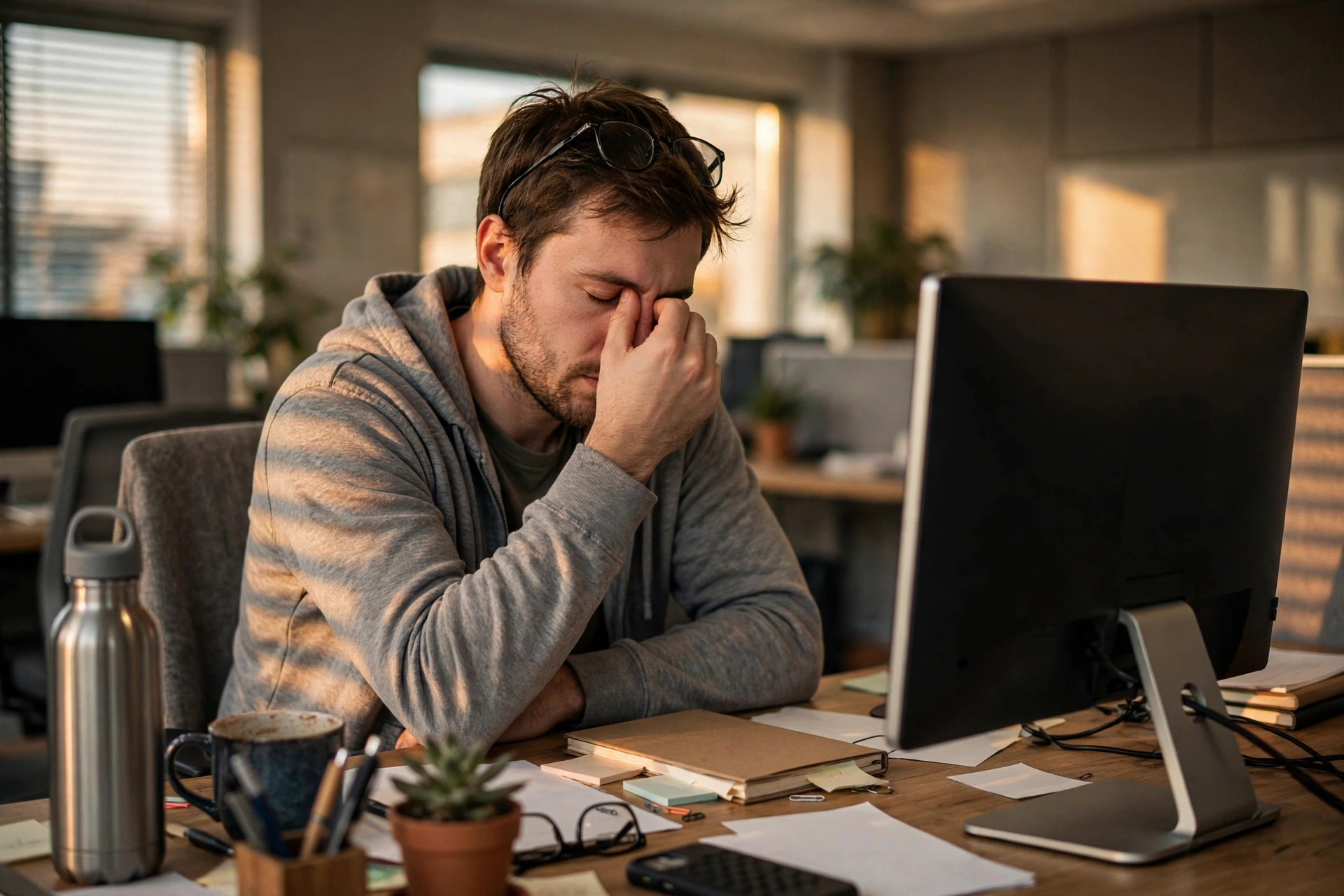
Think of your eyes like your legs after a long walk. They’ve been working all day without a proper rest. By 6pm they’re heavy, a bit sore, and just want to close. That’s normal after a screen-heavy day. But if it’s happening every single day, your routine is probably asking too much of them.
Your eyes are muscles, here’s why they’re exhausted by 6pm
When you look at something close up, a tiny ring of muscle inside your eye, called the ciliary muscle, squeezes to change the shape of your lens. That’s how you focus. Hold that squeeze for eight hours of emails and spreadsheets and the muscle gets tired, just like your hand would after gripping something all day.
At the same time, you’re barely blinking. Most people blink about 15 to 20 times a minute normally, but staring at a screen can cut that to a third. Blinking spreads your tear film, the thin layer of moisture that keeps your eyes comfortable, across the surface of the eye. Fewer blinks means drier, grittier, more tired-feeling eyes. Optometrists call this whole package digital eye strain. You might also hear it called computer vision syndrome. It’s the same thing.
The main causes, at a glance
| Cause | What’s happening | What helps |
|---|---|---|
| Screen overload | Ciliary muscle held in focus for hours | Regular breaks, the 20-20-20 rule |
| Not blinking enough | Tear film dries out between blinks | Conscious blinking, humid air |
| Poor sleep | Eyes don’t recover overnight | 7 to 9 hours, consistent bedtime |
| Dry air | Heating and air con dry the tear film | Humidifier, water near radiators |
| Old prescription | Eyes straining to compensate | Eye test every two years |
| Bad lighting | Pupils and muscles work harder | Balanced, glare-free lighting |
What is eye strain, exactly?
Eye strain is the medical term for tired, aching eyes after sustained close-up focus. It isn’t a disease. It’s your eyes telling you they’ve worked too long without a break, much like aching legs after a long walk.
A realistic desk-worker routine
You don’t need to overhaul your life. This routine fits into a normal working day:
- Follow the 20-20-20 rule. Every 20 minutes, look at something 20 feet (about 6 metres) away for 20 seconds. It lets your ciliary muscle relax. Set a quiet timer until it becomes a habit.
- Blink on purpose. Every so often, close your eyes slowly and fully, five times in a row. It feels silly. It works.
- Sort your screen position. The top of your screen should sit at or just below eye level, about an arm’s length away. Looking slightly down is easier on your eyes than looking up.
- Kill the glare. Close blinds or turn your screen away from windows. A matte screen filter helps if reflections are bad.
- Match your lighting. Your room shouldn’t be much brighter or darker than your screen. A desk lamp behind the screen, not shining on it, is ideal.
- Drink water and add humidity. Dry air dries eyes. A small humidifier, or even a bowl of water near a radiator, helps in heated rooms.
- Give your eyes a real evening break. Screens off for the last hour before bed helps your sleep too, and better sleep helps your eyes recover.
What about sleep?
Poor sleep and tired eyes feed each other. When you’re short on sleep, your eyes produce fewer tears and recover less overnight. And tired, uncomfortable eyes make it harder to wind down. Aim for 7 to 9 hours, which matches NHS guidance for adults. If your eyes feel gritty every morning specifically, the problem might be your bedroom rather than your screen.
When it’s not just tiredness
Tired eyes that ease with rest and breaks are almost always simple eye strain. But book an eye test if any of these apply: your eyes feel tired even on screen-free days, your vision has changed, you get frequent headaches, or it’s been more than two years since your last test. An out-of-date prescription is one of the most common hidden causes. After 40, the lens inside your eye naturally stiffens, which makes close-up work harder. That’s normal, but it means your prescription needs checking more often. The College of Optometrists recommends regular sight tests even if you think your vision is fine.
FAQs
Sleep helps, but it doesn’t undo a full day of screen strain. If your eyes are tired despite good sleep, look at your daytime habits: blinking, breaks, lighting, and your glasses prescription.
Eye strain itself doesn’t cause permanent damage. It’s uncomfortable, not dangerous. But ongoing strain is worth addressing, and a regular eye test rules out anything else going on.
They can ease the dryness that comes with tired eyes. Plain lubricating drops from the chemist are fine for occasional use. If you need them every day, see your optician to find the underlying cause.
If rest and better screen habits don’t help within a couple of weeks, if your vision has changed, or if you have pain, redness that won’t clear, or sudden changes in vision. Sudden vision changes need prompt attention.
This article is for general information only and does not replace professional medical advice. If you have ongoing concerns, see your optician or GP.