
Hay fever makes your eyes itch because pollen triggers an allergic reaction in them called allergic conjunctivitis. Your immune system mistakes harmless pollen for a threat and floods your eyes with histamine, which causes the itching, redness, and watering. The remedies that actually help: check the Met Office pollen forecast, wear wraparound sunglasses outdoors, try antihistamine or sodium cromoglicate eye drops from the pharmacy, and shower and change your clothes after being outside.
If your eyes turn into itchy, streaming messes every spring, you’re far from alone. Around one in four people in the UK gets hay fever, and itchy eyes are one of its most annoying symptoms. Here’s what genuinely works.
Why pollen makes your eyes itch
When pollen lands on the surface of your eye, your immune system releases histamine as part of its defence response. Histamine makes blood vessels swell and nerve endings fire, which you feel as itching, redness, and watering. The watering is actually your eye trying to flush the pollen out, it’s just not very effective on its own.
This is allergic conjunctivitis: “conjunctivitis” means inflammation of the conjunctiva, the clear membrane covering the white of your eye, and “allergic” tells you the trigger. It’s unpleasant but not dangerous, and it clears up when the pollen does.
Know your enemy: the UK pollen calendar
Different pollens peak at different times, which is why some people suffer in April and others in July:
- Tree pollen: late March to mid-May. Birch is the big one in the UK.
- Grass pollen: late May to July. This affects the most people and causes the worst symptoms.
- Weed pollen: late June to September. Nettles and dock are common UK triggers.
The Met Office publishes a daily pollen forecast for every UK region during the season. Checking it takes ten seconds and tells you whether it’s a sunglasses-and-drops day or a stay-indoors day. Make it part of your morning routine from April onwards.
Remedies that actually help
- Check the forecast and plan around it. On high-pollen days, keep windows closed, dry laundry indoors, and limit time outside in the morning and early evening when pollen counts peak.
- Wear wraparound sunglasses. They physically block pollen from reaching your eyes, and they work surprisingly well. Normal glasses help a bit; wraparound styles seal the sides too. Any decent pair from a high street optician does the job.
- Try pharmacy eye drops. Two types help: antihistamine drops, which calm the allergic reaction, and sodium cromoglicate drops, which stop your eyes releasing histamine in the first place. Both are available from UK pharmacies without a prescription. The pharmacist can help you pick. Use them as directed on the packet.
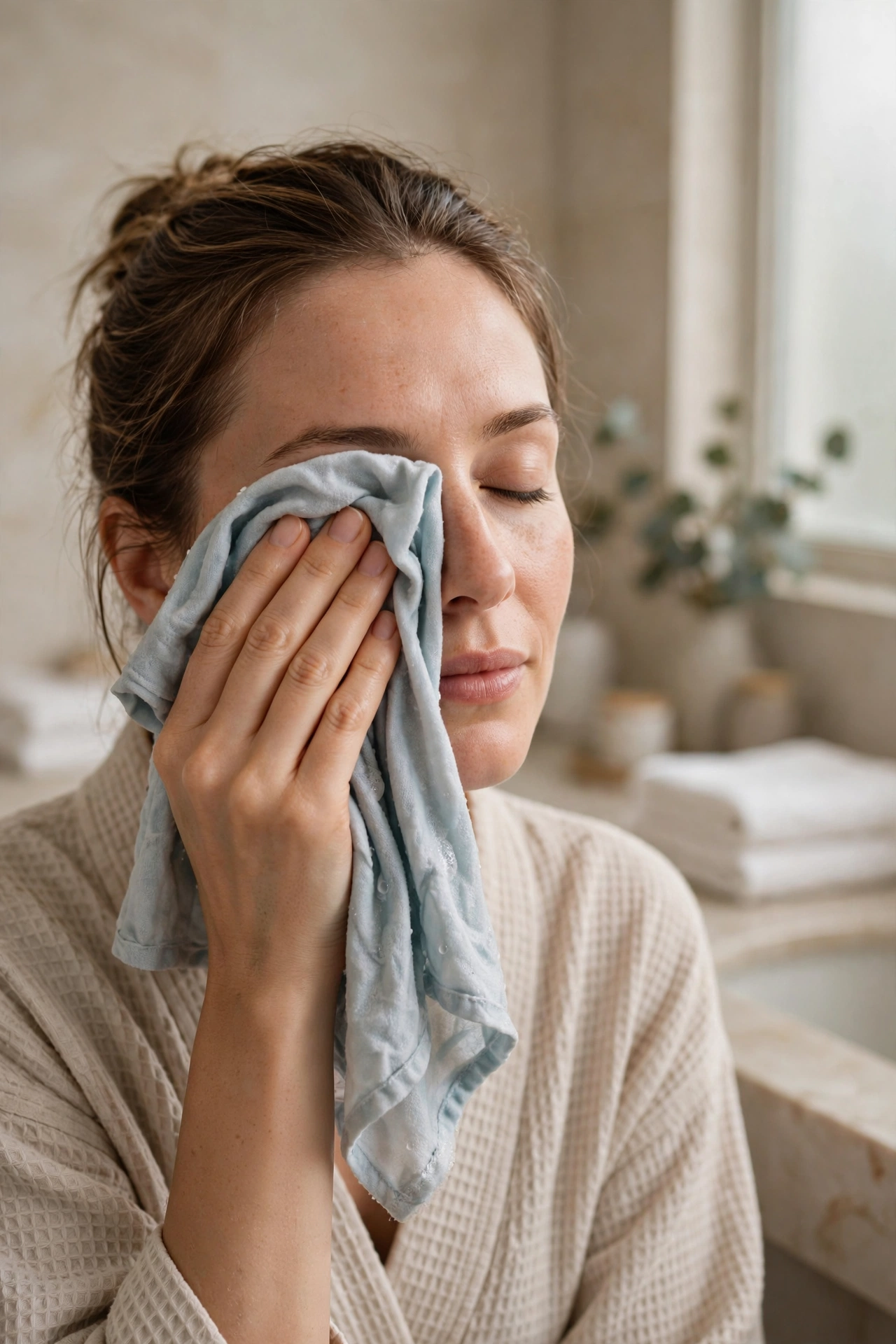
- Cold compress for flare-ups. A cool, damp flannel over closed eyes for 5 to 10 minutes eases itching fast when it’s bad. Keep a couple of flannels in the fridge during peak season.
- Shower and change after being outside. Pollen sticks to your hair, skin, and clothes. A quick shower and a change of clothes stops you carrying the day’s pollen into your bed. Wash your hair before sleep during bad weeks.
- Don’t rub. This is the hardest advice to follow and the most important. Rubbing grinds pollen deeper into the eye surface and makes the itching far worse. Cold compress instead, every time.
- Keep car windows closed. Use air conditioning on recirculate rather than open windows when driving through the countryside in summer.
Contact lens wearers: one useful tip
Pollen gets trapped under contact lenses and sits against your eye all day, which makes symptoms worse. On high-pollen days, switch to glasses if you can. If you must wear lenses, daily disposables are better than monthlies during hay fever season because you start each day with a fresh, pollen-free pair.
Remedies at a glance
| Remedy | How it helps |
|---|---|
| Met Office pollen forecast | Lets you plan high-pollen days |
| Wraparound sunglasses | Physically blocks pollen |
| Antihistamine eye drops | Calms the allergic reaction |
| Sodium cromoglicate drops | Stops histamine release |
| Cold compress | Fast relief during flare-ups |
| Shower and change | Removes pollen from hair and clothes |
| Not rubbing | Stops making it worse |
When to see a pharmacist or GP
See your pharmacist first, they can advise on drops and tablets. See your GP if: pharmacy treatments aren’t controlling your symptoms, your eyes are very swollen or painful, your vision is affected, or hay fever is ruining your sleep and daily life. Prescription-strength treatments exist for stubborn cases, so don’t just suffer through it.
Related reading: Why Do My Eyes Feel Tired All the Time? · Why Do My Eyes Burn and Sting?
FAQs
Pollen triggers histamine release in your eyes, causing itching, redness, and watering. It’s called allergic conjunctivitis and it settles when pollen levels drop.
Yes, they’re one of the most effective options. They calm the allergic reaction directly in the eye. Your pharmacist can recommend a suitable one.
Glasses are better on high-pollen days because lenses trap pollen against your eye. If you wear lenses, daily disposables are the kinder option.
If pharmacy treatments don’t control it, if there’s pain or swelling, if your vision is affected, or if symptoms are badly disrupting your life. Stronger prescription options are available.
This article is for general information only and does not replace professional medical advice. If you have ongoing concerns, see your optician or GP.