There is no NHS or NICE recommended dose for black seed oil, which is sold in the UK as a food supplement, not a medicine. Trials have used 1 to 3 grams of oil a day, about half to one teaspoon of liquid. What matters is thymoquinone (TQ), not the spoonful, and most UK sellers do not state it.
What black seed oil is
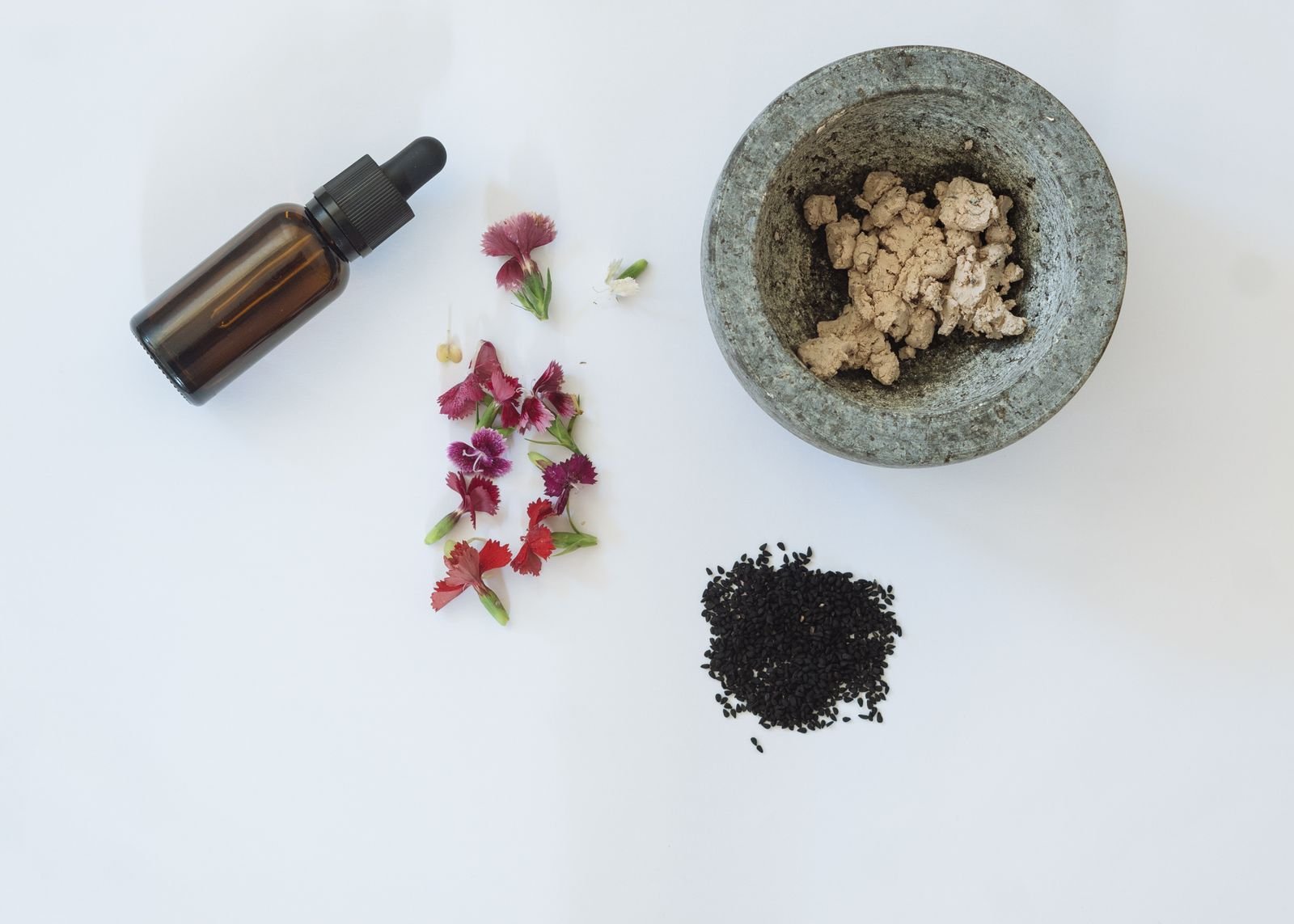
Black seed oil is cold-pressed from the seeds of Nigella sativa, a flowering plant also called black cumin or kalonji. It has been used for centuries as a food and a traditional remedy across the Middle East, North Africa and South Asia, and is revered in Islamic tradition. Its main active compound is thymoquinone, shortened to TQ, an antioxidant that gives the oil its strong, peppery smell and bitter taste.
What the research actually shows
A 2026 review in Endocrinology, Diabetes and Metabolism pooled 31 trials with 2,145 people who had metabolic conditions. Nigella sativa lowered fasting blood sugar by about 18.6 mg/dL and HbA1c by 0.56 points, body weight by about 1.6 kg, and blood pressure by about 3.3 over 2.8 mmHg. A 2017 review found almost the same blood sugar result, plus lower cholesterol. Trials mostly ran 8 to 12 weeks, and insulin resistance did not improve, so the mechanism is not fully explained. Black seed is not a treatment for diabetes, high blood pressure or high cholesterol. Skin, hair, immunity and digestion have weaker evidence.
How much to take, and the TQ standard
There is no official dose. The NHS does not recommend black seed oil, and NICE has no guidance on it. Trials used 1 to 3 grams of oil a day. Sellers mostly suggest half to one teaspoon of liquid a day. A teaspoon of one oil is not the same as a teaspoon of another, because TQ content varies: Herbal Stems reports Ethiopian oil at 1.5 to 3.5 percent TQ and Egyptian oil at 0.5 to 1.5 percent TQ. Dose by TQ, not by spoonful.
Magnesium is another supplement where the form and the dose change what you get.
| Form and daily dose | TQ per daily dose |
|---|---|
| Half a teaspoon liquid (2.5 ml), 2.5% TQ oil | About 62 mg |
| One teaspoon liquid (5 ml), 2.5% TQ oil | About 125 mg |
| One teaspoon liquid (5 ml), Ethiopian oil, 1.5 to 3.5% TQ | About 75 to 175 mg |
| 2 capsules a day (500 mg oil) | TQ not stated |
The 2.5 percent TQ oil is from Nature’s Blends, and the Ethiopian range is from Herbal Stems. Without a stated TQ percentage, you cannot work out your TQ dose.
Oral vs topical: two different protocols
By mouth, black seed oil is swallowed from a spoon, mixed with honey or warm water, or added to a smoothie. Capsules hide the taste but also hide the TQ dose. On skin and hair, the oil is rubbed onto the skin or massaged into the scalp. No source checked states how much to use, how often, or how long to leave it on. Test a small amount on one small area first, use only a few drops, and stop if the skin reddens or itches.
Who should avoid it
The NHS advises that herbal medicines are not tested in the same way as standard medicines, and they are not available on the NHS. Do not take herbal medicines if you are pregnant or breastfeeding, if you have kidney or liver problems, or if you take certain medicines. Herbal medicines are not recommended for children. Mercy Oil, a Top 3 seller, suggests half a teaspoon for children under 10. Do not follow that.
Berberine is another supplement where the dose and the medicine interactions matter. Vitamin D is another supplement to check with a GP or pharmacist before combining with medicines.
| Medicine or situation | What the source says | What to do |
|---|---|---|
| Blood pressure medicines (ramipril) | NHS: do not mix well. Trials show a small fall. | Ask your GP first. |
| Diabetes medicines (metformin, insulin) | NHS: do not mix well. Trials show a small fall. | Ask your GP first. |
| Blood thinners (warfarin) | NHS: do not mix well. Fushi: avoid with bleeding disorders. | Ask your GP first. |
| Statins, antidepressants, hormonal contraception | NHS: do not mix well. No black seed study found. | Ask your pharmacist first. |
| Pregnancy and breastfeeding | NHS: do not take herbal medicines. Herbal Stems agrees. | Do not use. |
| Surgery | Fushi: avoid before surgery. | Tell your surgical team. |
| Children | NHS: not recommended. Herbal Stems: not suitable under 18. | Do not give to children. |
| Kidney or liver problems | NHS: do not take herbal medicines. | Do not use without medical advice. |
Side effects
Side effects are usually mild: stomach upset, nausea from the strong taste, and, rarely, an allergic reaction or skin irritation. Very high doses are not well studied. More is not better. Start low, and stop if you feel unwell.
How to choose a good oil in the UK
Look for cold-pressed oil in a dark glass bottle, with nothing on the ingredients list except Nigella sativa oil. The most useful check is the one most labels fail: a stated TQ percentage and a batch test result. In the UK, black seed oil is sold as a food supplement, regulated as food, not as a medicine. The label must state the recommended daily dose and warn against exceeding it, and it must not claim to treat, cure or prevent disease.
Myths vs facts
Myth: black seed oil cures every disease. Fact: it is a food supplement with modest effects on a few markers, not a cure. Myth: more is better. Fact: trials used 1 to 3 grams a day. Myth: natural means safe for everyone. Fact: the NHS warns that herbal medicines can interact with prescribed medicines.
FAQs
How much black seed oil should I take a day?
Trials used 1 to 3 grams a day, about half to one teaspoon of liquid. There is no official dose.
What is thymoquinone (TQ)?
TQ is the main active compound in black seed oil. Its content varies by origin, from about 0.5 to 3.5 percent.
Is black seed oil safe to take every day?
In trial amounts, it is generally well tolerated.
Can I take it with blood pressure or diabetes medicine?
Only after speaking to your GP or pharmacist. Black seed can lower blood pressure and blood sugar a little.
Is liquid or capsules better?
Liquid lets you see the TQ percentage. Capsules hide the taste, but most capsule labels state only the oil weight, not the TQ.
Can I use it on my skin and hair?
Yes, rubbed onto skin or massaged into the scalp, but no source checked states a standard amount or frequency.
Sources
- NHS, Herbal medicines and complementary therapies: nhs.uk/tests-and-treatments/herbal-medicines-and-complementary-therapies/
- Food Standards Agency and Department of Health, Food supplements guidance: gov.uk/government/publications/food-supplements-guidance-and-faqs
- MHRA Yellow Card scheme: yellowcard.mhra.gov.uk
- Endocrinology, Diabetes and Metabolism 2026;9(2):e70207, The Effect of Nigella sativa Supplementation on Cardiometabolic Health in Patients With Metabolic Diseases: pubmed.ncbi.nlm.nih.gov/41858302/
- Daryabeygi-Khotbehsara et al., Complementary Therapies in Medicine 2017;35:6-13, Nigella sativa improves glucose homeostasis and serum lipids in type 2 diabetes: pubmed.ncbi.nlm.nih.gov/29154069/
- Herbal Stems, Mercy Oil, Nature’s Blends and Fushi seller pages, all read 18 Nov 2026.
This article is general information, not medical advice. There is no NHS or NICE recommended dose. Speak to a GP or pharmacist before using black seed oil, especially if you are pregnant, breastfeeding, taking medication, or managing a health condition.