Every three months. That is the simple answer, and it is the one the NHS gives too. But most people keep their toothbrush far longer, often until the bristles are bent and useless. Here is why the three-month rule matters, a quick test to check your brush, and a reminder system that takes no effort.
Why three months?
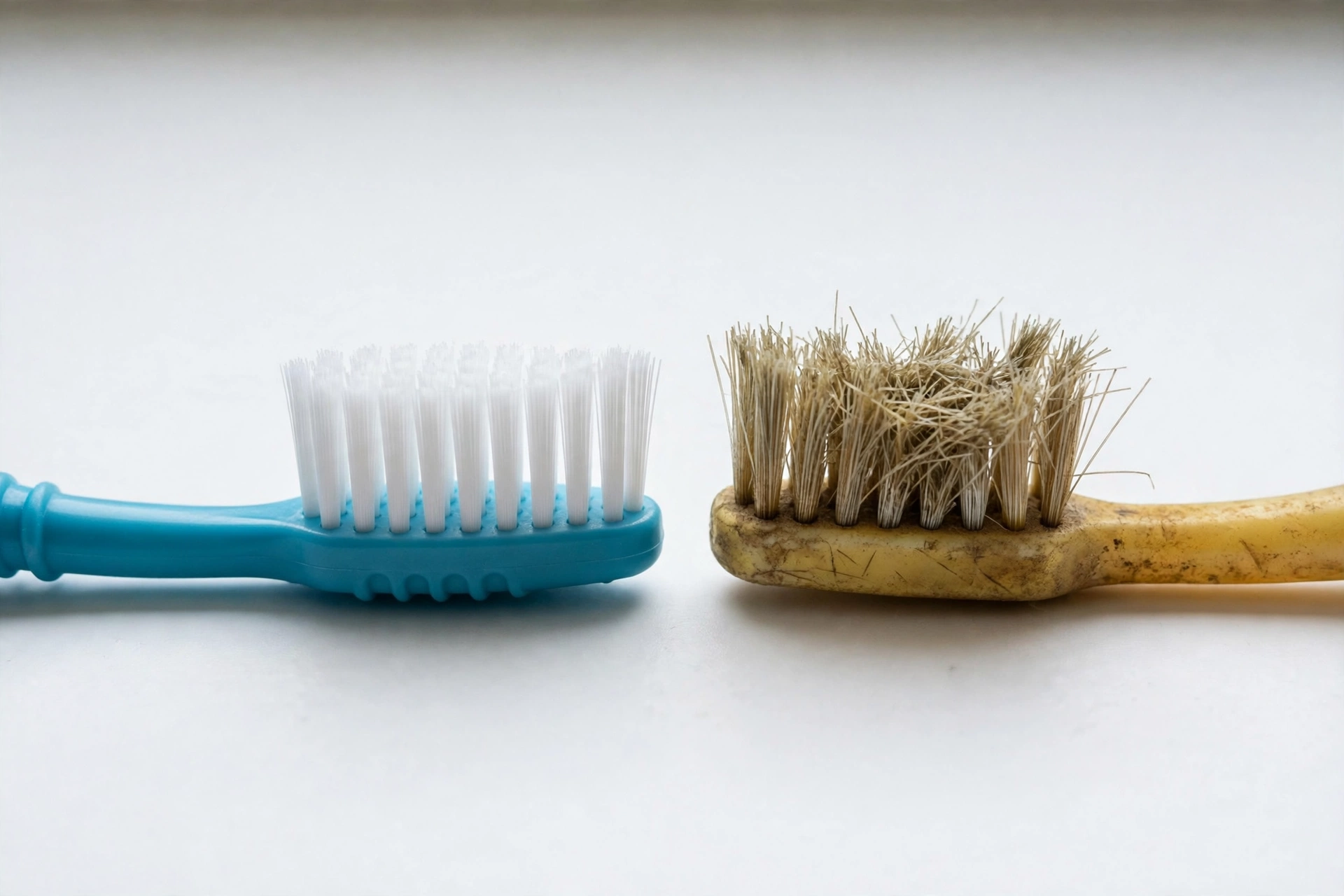
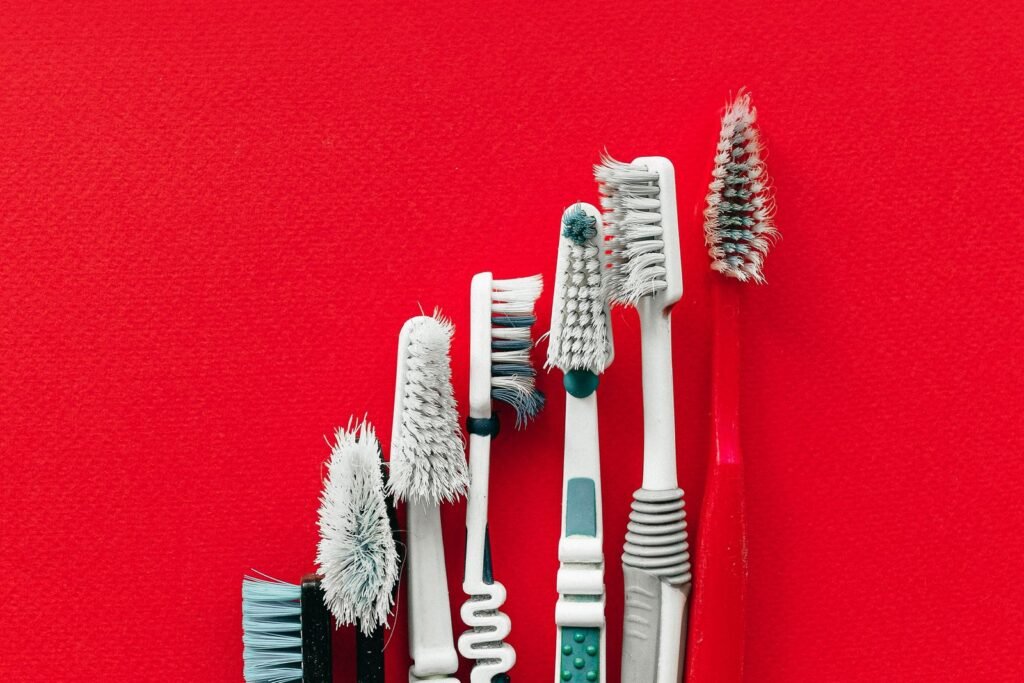
Toothbrush bristles wear out gradually. After about three months of twice-daily use, they become bent and frayed, which means they clean less well. A worn brush misses more plaque, and plaque is what leads to gum problems and bad breath. Replacing your brush on time is one of the simplest upgrades you can make to your routine.
The bristle check: a 5-second test
Look at your brush head from the side. If the bristles splay outwards, bend in different directions, or look flattened, it is done. A new brush has bristles that stand straight and even. If yours looks tired, replace it now, even if three months have not passed yet. People who suffer from teeth grinding often wear bristles out faster, so check monthly if that sounds like you.
Manual vs electric: the replacement interval table
The advice can look conflicting, because some sources say 3 months and others say 6 to 8 weeks. The two figures are for different people. The NHS rule is 3 months for a standard adult brushing twice a day, whether the brush is manual or electric. The 6 to 8 week figure is for people whose bristles wear out faster: heavy brushers who press hard, and people who wear braces.
| Brush type | NHS interval | Change sooner if | Cost per year |
|---|---|---|---|
| Manual toothbrush | Every 3 months | Bristles splay or flatten early | 4 brushes a year |
| Electric toothbrush head | Every 3 months | Indicator bristles faded, or head looks worn | 4 heads a year |
| Heavy brusher, or braces wearer | Every 6 to 8 weeks | Bristles splay early, or food catches in the brush | 6 to 8 heads a year |
The NHS also says it does not matter whether you use an electric or a manual toothbrush, as long as you clean all the surfaces of your teeth and use fluoride toothpaste. What matters is the condition of the bristles. If your brush looks worn at six weeks, swap it then.
What happens if you don’t change it
Nothing dramatic at first, but cleaning gets steadily worse. Old bristles are less effective at removing plaque along the gum line, which raises the risk of bleeding gums and decay. Old brushes can also harbour more bacteria, though there is no strong evidence they make you ill. The main cost is simply a less clean mouth.
What about electric toothbrush heads?
The same three-month rule applies to electric toothbrush heads. Most come with blue indicator bristles that fade as a reminder. Replacement heads cost a few pounds each, so a year’s supply works out at roughly the price of a takeaway.
What a year of toothbrushes costs
A basic manual brush costs about £3 to £5, so four a year is about £12 to £20 a year. Standard electric heads are often sold in packs of four for about £11, about £2.75 a head and about £11 a year. Premium heads cost more: a two pack of Oral-B iO heads is about £11, about £5.50 a head and about £22 a year. These are typical UK shop prices seen in November 2026, and prices vary by shop and by offer. A multipack is usually the cheapest way to buy, and a subscription that delivers a new head every three months removes the need to remember at all.
Should you change it after being ill?
It is a common worry, but there is no strong evidence you need to throw your brush away after a cold or flu. Your immune system already knows those germs. That said, if it puts your mind at ease, a new brush is cheap, so do what feels right. Do replace it if someone else has used it, or if it has been stored somewhere unhygienic.
Keeping a brush clean between changes
Rinse the brush under clean running water after every use, shake off the extra water, and leave it to air dry standing upright in a holder. Do not store it in a closed case at home, because a damp brush in a closed case stays damp. Do not share a toothbrush, and do not store brushes so close together that the heads touch. You can soak the bristles in antibacterial mouthwash for 20 minutes now and then. None of this restores worn bristles, so cleaning is no substitute for replacing the brush on time.
A simple reminder system
Buy four brushes in January and write the change months on your calendar. Set a recurring phone reminder for every three months. Change your brush with the seasons, which is easy to remember. Keep a spare in the cupboard so you never have an excuse to keep using a worn one.
FAQs
How often should you change your toothbrush?
Every three months, or sooner if the bristles are worn, splayed, or flattened. This matches NHS guidance and applies to electric toothbrush heads too.
Do I need a new toothbrush after being ill?
Not necessarily. There is no strong evidence that your old brush will reinfect you after a cold or flu. Replace it if it puts your mind at ease, or if someone else has used it.
Do electric toothbrush heads last longer?
No. They follow the same three-month rule as manual brushes. Many have fading indicator bristles to remind you when it is time for a new head.
Can I just clean my old toothbrush instead of replacing it?
Rinsing and air-drying keeps it hygienic, but it does not restore worn bristles. Boiling or microwaving can damage the brush. Replacement is the only fix for worn bristles.
Do I need to change my brush more often if I wear braces?
Yes, usually. Braces wear bristles out faster and trap more food, so check your brush monthly and expect to replace it every 6 to 8 weeks. Ask your orthodontist which head shape suits your brace.
Sources
- NHS, How to keep your teeth clean: https://www.nhs.uk/live-well/healthy-teeth-and-gums/how-to-keep-your-teeth-clean/
- Sutton Health and Care NHS, Dental health: http://www.suttonhealthandcare.nhs.uk/dental-health
- Philips, How often should you change your toothbrush?: https://www.philips.com.au/c-e/oral-health-care/toothbrushing/how-to-look-after-your-toothbrush
This article is for general information only and does not replace professional dental advice. If you have ongoing concerns, see your dentist.