Every three months. That is the simple answer, and it is the one the NHS gives too. But most people keep their toothbrush far longer, often until the bristles are bent and useless. Here is why the three-month rule matters, a quick test to check your brush, and a reminder system that takes no effort.
Why three months?
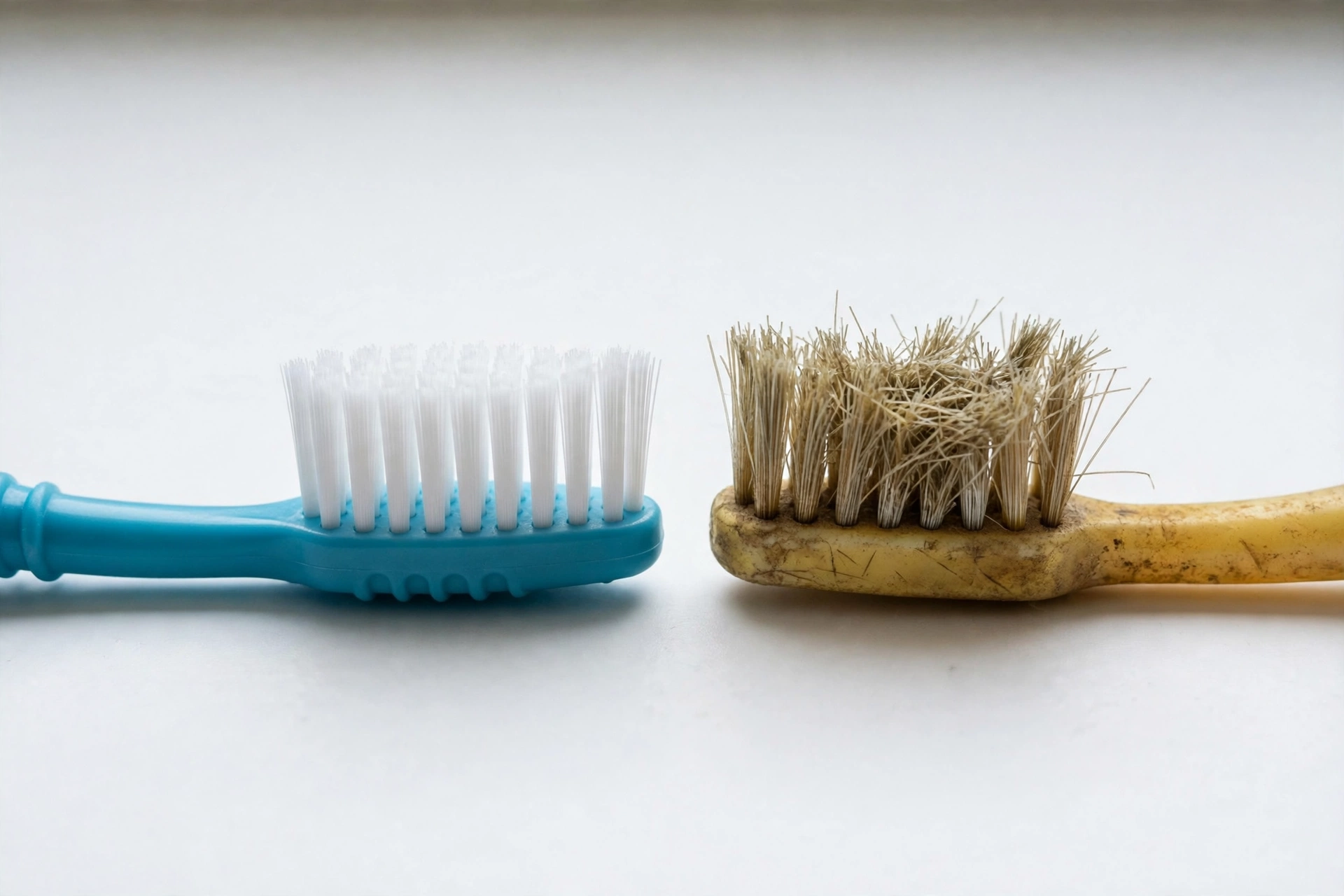
Toothbrush bristles wear out gradually. After about three months of twice-daily use, they become bent and frayed, which means they clean less well. A worn brush misses more plaque, and plaque is what leads to gum problems and bad breath. Replacing your brush on time is one of the simplest upgrades you can make to your routine.
The bristle check: a 5-second test
Look at your brush head from the side. If the bristles splay outwards, bend in different directions, or look flattened, it is done. A new brush has bristles that stand straight and even. If yours looks tired, replace it now, even if three months have not passed yet. People who suffer from teeth grinding often wear bristles out faster, so check monthly if that sounds like you.
What happens if you don’t change it
Nothing dramatic at first, but cleaning gets steadily worse. Old bristles are less effective at removing plaque along the gum line, which raises the risk of bleeding gums and decay. Old brushes can also harbour more bacteria, though there is no strong evidence they make you ill. The main cost is simply a less clean mouth.
What about electric toothbrush heads?
The same three-month rule applies to electric toothbrush heads. Most come with blue indicator bristles that fade as a reminder. Replacement heads cost a few pounds each, so a year’s supply works out at roughly the price of a takeaway.
Should you change it after being ill?
It is a common worry, but there is no strong evidence you need to throw your brush away after a cold or flu. Your immune system already knows those germs. That said, if it puts your mind at ease, a new brush is cheap, so do what feels right. Do replace it if someone else has used it, or if it has been stored somewhere unhygienic.
A simple reminder system
- Buy four brushes in January and write the change months on your calendar.
- Set a recurring phone reminder for every three months.
- Change your brush with the seasons, which is easy to remember.
Keep a spare in the cupboard so you never have an excuse to keep using a worn one.
FAQs
How often should you change your toothbrush?
Every three months, or sooner if the bristles are worn, splayed, or flattened. This matches NHS guidance and applies to electric toothbrush heads too.
Do I need a new toothbrush after being ill?
Not necessarily. There is no strong evidence that your old brush will reinfect you after a cold or flu. Replace it if it puts your mind at ease, or if someone else has used it.
Do electric toothbrush heads last longer?
No. They follow the same three-month rule as manual brushes. Many have fading indicator bristles to remind you when it is time for a new head.
Can I just clean my old toothbrush instead of replacing it?
Rinsing and air-drying keeps it hygienic, but it does not restore worn bristles. Boiling or microwaving can damage the brush. Replacement is the only fix for worn bristles.
This article is for general information only and does not replace professional dental advice. If you have ongoing concerns, see your dentist.