
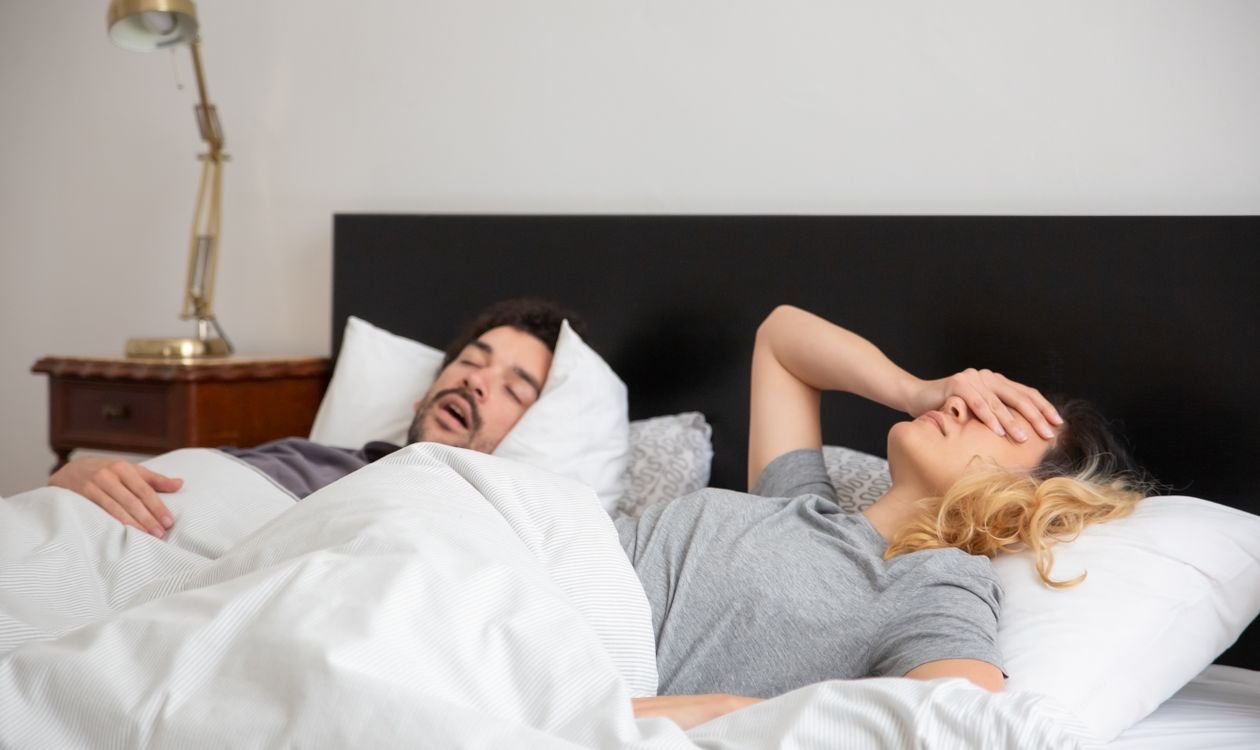
Being told you snore, or waking yourself up with the sound of it, is a common but often overlooked issue. Snoring happens when airflow through the mouth and nose is partially blocked during sleep, and while it’s often harmless, it can occasionally signal something worth addressing.
Quick Answer
Snoring happens when relaxed throat tissue partially blocks the airway during sleep, causing surrounding tissue to vibrate. Common causes include sleep position, nasal congestion, alcohol, weight, and, in some cases, sleep apnoea.
Common Causes of Snoring
Sleep Position
Sleeping on your back allows the tongue and soft tissue to fall backward into the throat, narrowing the airway and making snoring more likely than sleeping on your side.
Nasal Congestion
Colds, allergies, or a deviated septum can block nasal airflow, forcing you to breathe through your mouth, which increases the likelihood of snoring.
Alcohol Before Bed
Alcohol relaxes the muscles in the throat more than usual, making the airway more likely to narrow and vibrate during sleep.
Being Overweight
Extra tissue around the neck and throat can narrow the airway, which is why snoring is more common and often louder in people carrying excess weight.
Age
As throat muscles naturally lose tone with age, the airway becomes more prone to narrowing during sleep, which is why snoring often increases later in life.
Sleep Deprivation
Being overtired causes throat muscles to relax more than usual during sleep, which can trigger or worsen snoring even in people who don’t normally snore. Ongoing sleep problems are covered in our guide on why you might struggle to sleep at night.
Anatomy
A naturally narrow throat, enlarged tonsils, or a long soft palate can all predispose someone to snoring, regardless of weight or lifestyle factors.
Sleep Apnoea
Loud, persistent snoring with pauses in breathing, gasping, or choking sounds can indicate obstructive sleep apnoea, a condition where the airway repeatedly narrows or closes during sleep. Persistent daytime tiredness is worth investigating too. See our guide on why you might feel tired all the time.
How to Reduce Snoring
- Try sleeping on your side rather than your back
- Treat nasal congestion with saline rinses or allergy management
- Limit alcohol, particularly in the hours before bed
- Maintain a healthy weight where relevant
- Keep a consistent sleep schedule to avoid overtiredness
- Consider a humidifier if dry air is worsening congestion
When Snoring Needs Medical Attention
- Snoring is loud, frequent, and disruptive to your or a partner’s sleep
- You or a partner notice pauses in breathing, gasping, or choking during sleep
- You feel excessively tired during the day despite adequate time in bed
- You experience morning headaches or a dry mouth on waking
These signs point toward sleep apnoea, a treatable condition that is worth diagnosing through a sleep study rather than managing snoring alone.
FAQs
Is snoring always a sign of sleep apnoea?
No. Most snoring is harmless and linked to sleep position, congestion, or alcohol. Sleep apnoea is more likely when snoring is paired with breathing pauses or daytime exhaustion.
Can losing weight stop snoring?
For many people, yes, since reducing tissue around the neck and throat can ease airway narrowing, though snoring can still occur at a healthy weight due to anatomy or other factors.
Why do I only snore when I’ve been drinking?
Alcohol relaxes throat muscles more than usual, making the airway more prone to narrowing and vibrating during sleep, which is why snoring often appears or worsens after drinking.
Conclusion
Snoring is usually explained by sleep position, congestion, or lifestyle factors, and often improves with simple changes. However, loud snoring paired with breathing pauses or daytime exhaustion is worth having assessed, since it may point to sleep apnoea, a condition that responds well to treatment.
Last reviewed: August 2026. This article is for general information only and does not replace professional medical advice. If snoring is paired with breathing pauses, please speak to a GP.