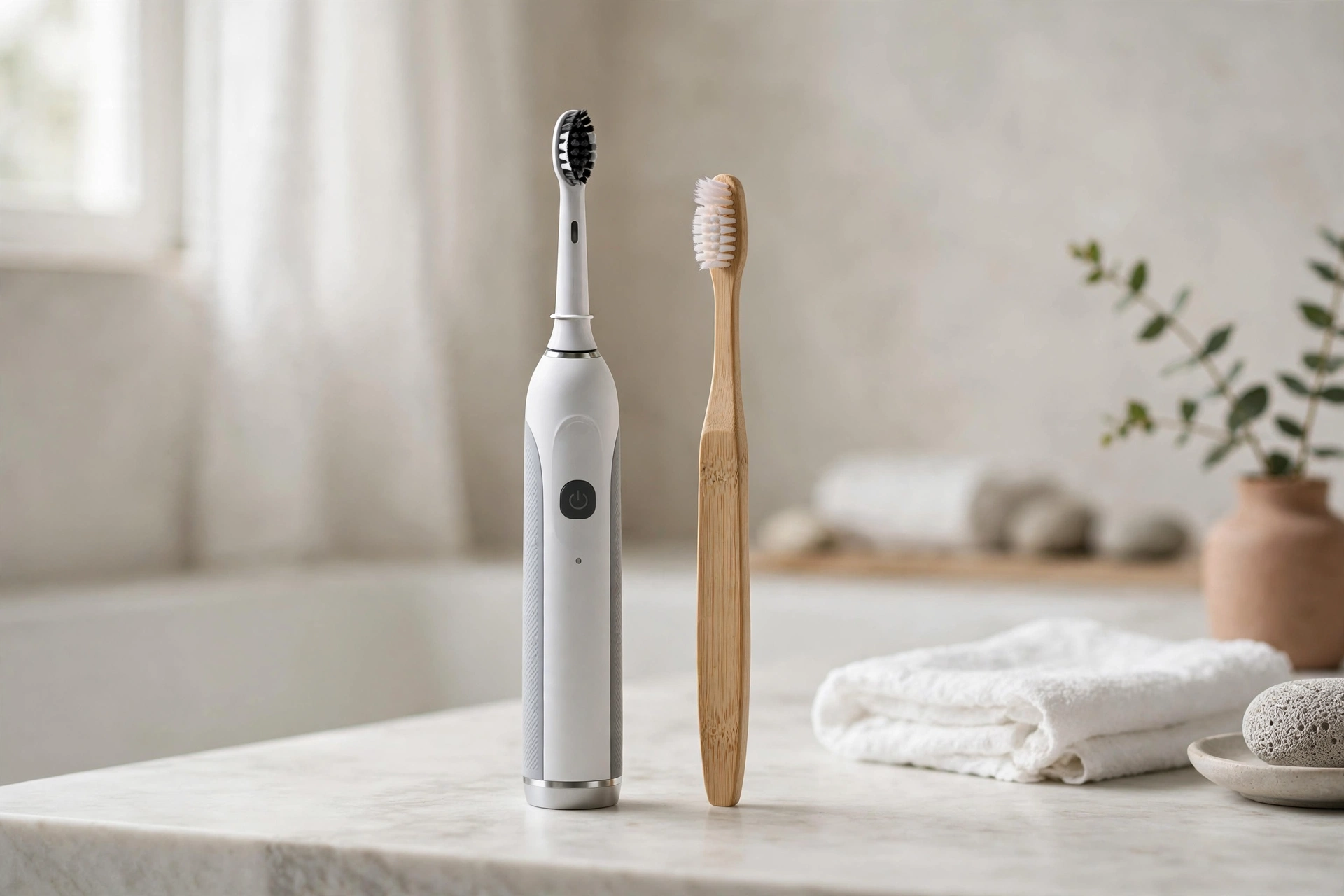
Ask a dentist whether you should buy an electric toothbrush and most will say yes, if you can afford one. But is it actually worth the money? Here’s an honest comparison of cleaning, cost, and ease of use, so you can decide for yourself.
Does electric actually clean better?
Studies generally show that electric toothbrushes remove slightly more plaque than manual ones, particularly over several months of use. The difference isn’t enormous, and a careful brusher with a manual brush can get excellent results. Where electric brushes win is consistency: the built-in timer keeps you brushing for the full two minutes, and the moving head does the scrubbing for you.
That said, technique still matters. Poor technique with an electric brush won’t beat good technique with a manual one. If your gums bleed or you have persistent bad breath despite brushing, the issue may be technique or flossing rather than the brush itself.
Head-to-head comparison
| Feature | Manual | Electric |
|---|---|---|
| Cleaning ability | Good with proper technique | Slightly better, more consistent |
| Upfront cost | £1 to £3 | £20 to £200+ |
| Yearly running cost | A few pounds for new brushes | £15 to £40 for replacement heads |
| Ease of use | Needs good technique | Does the work for you; built-in timer |
| Travel | Light and simple | Bulkier; needs charging |
| Best for | Careful brushers on a budget | Anyone who wants an easier, more consistent clean |
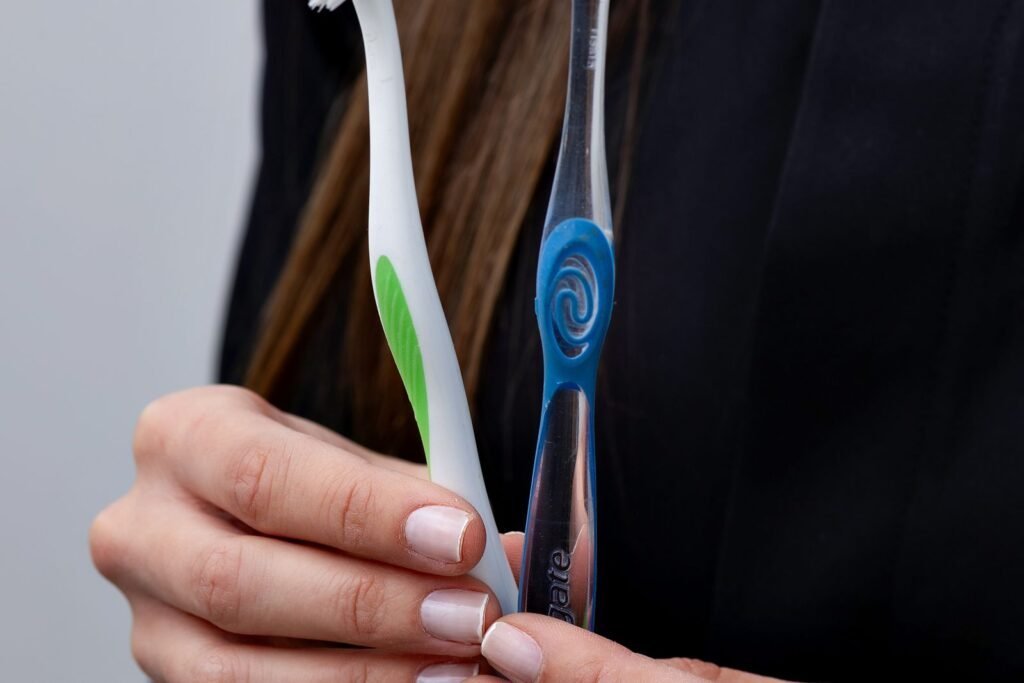
Which brush for you? A decision table by user group
No Top 3 page sets out which brush suits each group, so here is the table. The NHS position is simple: either brush works with fluoride toothpaste, though some people find an electric brush easier. A Cochrane review of 56 trials with 5,068 people found electric brushes removed 21 percent more plaque after 3 months and reduced gingivitis by 11 percent, so the table leans electric where technique is hardest.
| User group | Best choice | Why |
|---|---|---|
| Braces wearers | Electric, small head | Reaches around brackets, timer keeps you brushing |
| Dental implants | Electric, soft head, plus interdental brushes | Gentle on implant margins |
| Gum disease or bleeding gums | Electric with a pressure sensor | Stops you pressing too hard |
| Children | Electric, small head, supervised | Easier to hold, timer makes 2 minutes fun; supervise until at least 7 |
| Limited dexterity or arthritis | Electric, large handle | The head does the scrubbing, so grip matters less |
| Careful brusher on a budget | Manual, soft bristles | Good technique gives excellent results for a few pounds |
| Frequent traveller | Manual | Light, simple, no charging |
Whatever you choose, the NHS advises a small head with a compact, angled arrangement of bristles, medium or soft for most people, and toothpaste with at least 1,350 parts per million fluoride for adults.
The technique check: are you actually brushing for 2 minutes?
The brush matters less than the two minutes: the NHS advises brushing twice a day for about 2 minutes, cleaning the inside, outside and chewing surfaces of every tooth. With a manual brush, angle the bristles at the gum line and use short, gentle strokes. With an electric brush, let the head do the work. After brushing, spit out the excess toothpaste and do not rinse straight away, because rinsing washes away the fluoride left on your teeth. If you are choosing a brush for surface stains, our guide on how to whiten teeth naturally explains what works.
The cost question
This is the real decision for most people. A manual brush costs a couple of pounds; a decent electric brush costs £30 to £60, plus replacement heads. Remember to change the brush or head every three months either way. Over a year, an electric brush costs noticeably more, but many people find the investment worthwhile for the easier clean.
If the price puts you off, a mid-range electric brush on offer cleans just as well as a premium model. You’re paying extra for features like Bluetooth and pressure sensors, not better cleaning.
Ease of use
This is where electric brushes shine. The timer tells you when to move to the next section of your mouth, and most people find they brush for longer. For children, older people, or anyone with limited hand movement, an electric brush can make a real difference. Some models also warn you if you press too hard, which helps people who suffer from teeth grinding or brush aggressively.
Who benefits most from going electric?
Anyone who rushes their brushing, struggles with technique, has braces, or finds manual brushing tiring. If you already brush carefully for two minutes twice a day and your dentist is happy, a manual brush is doing its job.
What does the NHS say?
The NHS recommends brushing twice a day with fluoride toothpaste for two minutes, but doesn’t say one type of brush is better than the other. The official advice focuses on technique and consistency, which tells you what matters most.
The verdict
An electric toothbrush cleans slightly better and makes good brushing easier, but it isn’t essential. If you can afford one, it’s a worthwhile upgrade. If you can’t, a manual brush with good technique will keep your teeth perfectly healthy. Either way, replace it on time and don’t forget to floss.
FAQs
Do dentists recommend electric toothbrushes?
Most do, because they make consistent, thorough brushing easier. But dentists also agree that a manual brush with good technique is perfectly fine.
Is an electric toothbrush worth the money?
If it helps you brush for the full two minutes twice a day, yes. If you already brush well with a manual brush, the benefit is smaller.
Can an electric toothbrush damage your gums?
Not if you use it correctly. Let the brush do the work and don’t press hard. Many models have pressure sensors that warn you.
How often should you replace electric toothbrush heads?
Every three months, the same as a manual brush. Many heads have indicator bristles that fade to remind you.
Should children use an electric toothbrush?
They can, and it often helps, because the timer and the moving head make brushing easier and more fun. Use a small head and family toothpaste with 1,350 to 1,500ppm fluoride, and supervise brushing until your child is at least 7, as the NHS advises. Supervision still matters: a child can miss the back teeth and the gum line.
Sources
- NHS, How to keep your teeth clean: https://www.nhs.uk/live-well/healthy-teeth-and-gums/how-to-keep-your-teeth-clean/
This article is for general information only and does not replace professional dental advice. If you have ongoing concerns, see your dentist.